
Training for HYROX at 6 Months Pregnant: Lessons on Fitness, Flexibility, and Listening to Your Body
Redefining What Strength Looks Like Through Pregnancy and Athletic Pursuits
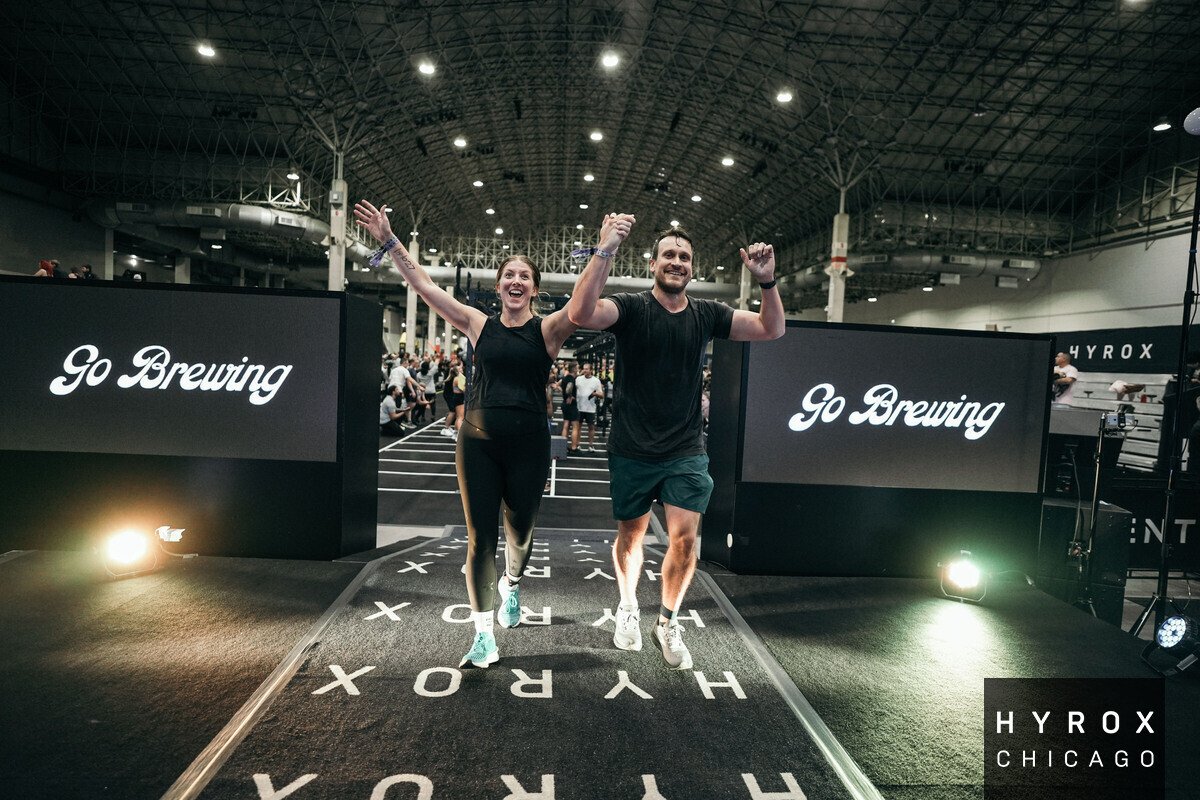
Crossing the Hyrox Mixed Doubles finish line with my husband at 6-months pregnant in Chicago
Let’s get one thing straight: pregnancy has a way of completely rewriting what you think strength, discipline, and “doing enough” look like.
Now add training for HYROX - a global fitness race that combines running with functional strength work - at six months pregnant, and suddenly you’re operating in a whole new lane.
In this episode of Fit Friends Happy Hour, I’m pulling back the curtain on what it actually looked like to train, modify, and show up for HYROX while growing a human. Not to prove anything. Not to be impressive. But to stay connected to movement, community, and myself during a season of massive change.
If you’re pregnant, postpartum, injured, burned out, or just questioning what “fitness” should look like right now - this one’s for you.
The Myths and Mindset Around Pregnancy Fitness
We’re fed two extreme narratives when it comes to pregnancy and fitness:
“Better stop moving, it’s too risky.”
“If you don’t train hard, you’re letting yourself go.”
Neither is helpful. And both completely miss the point.
Pregnancy isn’t a setback. It’s a season. And seasons demand flexibility, both physically and mentally. I wasn’t trying to “bounce back,” maintain an identity, or earn a gold star for pushing through discomfort. I was trying to move in a way that felt supportive, safe, and sustainable for that day.
Some days that meant feeling strong. Other days it meant slowing way down. Both counted.
What HYROX IS, and Why I STILL SAID YES
If you’re unfamiliar, HYROX is an indoor fitness race made up of:
8K total running
8 functional workout stations (sled pushes/pulls, rowing, ski erg, lunges, wall balls, farmer’s carries, etc.)
It’s gritty. It’s hard. But yes, it’s adjustable!
For me, signing up wasn’t about performance. It was about community, doing something with people I love, and reminding myself that movement can evolve without disappearing altogether.
Also, we decided to raise money for charity, which made the “why” even bigger.
The Science (and the Reality) of Training While Pregnant
Pregnancy changes everything:
Blood volume goes up → heart rate is higher
Relaxin hormone increases → joints feel looser, sometimes cranky
Breathing mechanics change → core engagement feels different
Instead of rigid rules, I focused on:
RPE over heart rate obsession
Strength over intensity
Recovery like it was my job
Running got slower. Volume came down. Plyometrics were minimized. Strength work became more intentional, especially posterior chain work (glutes, hamstrings, back).
And some days? Rest won.
How I Modified My Training (Physically and Mentally
Here’s the framework that kept me grounded:
1. Symptoms > Rules
Forget arbitrary limits. If something didn’t feel good, we adjusted. Period.
2. Strength > Intensity
Two solid strength-focused days per week. Less impact. Fewer “ego reps.”
3. Flexibility > Perfection
Missed sessions. Extra rest days. No guilt. No spiraling.
Mentally, I also had to protect my peace. That meant limiting social media, avoiding comparison, and constantly reminding myself: listen to your body.
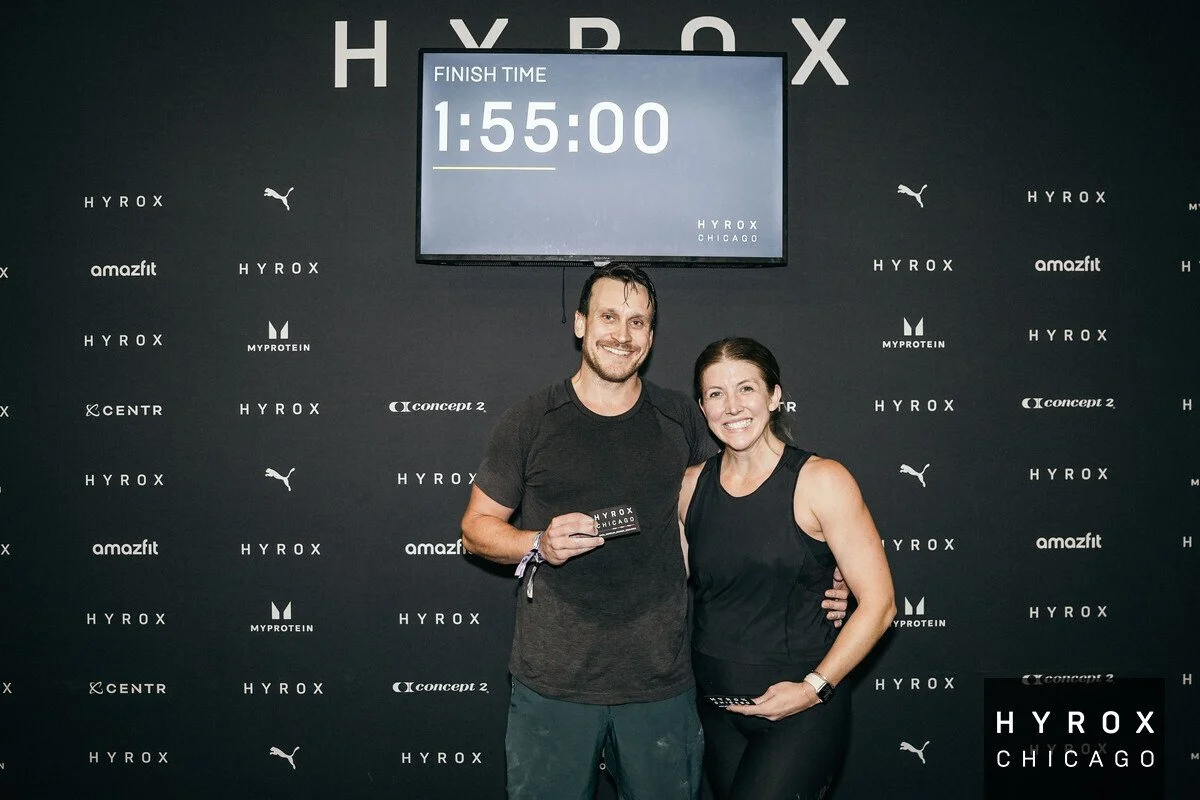
Race Day: What actually mattered
On race day, everything was modified:
Jogging and walking as needed
Splitting stations with my partner (Thanks Joey for doing all the broad jump burpees)
Regular rate of perceived exertion (RPE) and heart-rate check-ins
Fuel? Water, electrolytes, and quick carbs (yes, I did bring my own Sour Patch Kids).
No one asked our finish time. No one cared. And honestly? Neither did I.
What mattered was showing up, listening to my body, and crossing the finish line safely… feeling proud instead of wrecked.
Actionable Advice for Every Season
Whether you’re pregnant, postpartum, injured, or just tired of pushing:
Work with a pelvic floor physical therapist if you can
Stop chasing breathlessness - listen to your RPE and honor symptoms above all
Keep strength work gentle and intentional
Ease up on explosive movements
Rest more than you think you need. Growing a human is a marathon in itself!
Protect your mental health from comparison and unsolicited opinions
Final Thoughts: Your Season, Your Strength
In any season - pregnancy, postpartum, injury, or transition - your body is wise, resilient, and deserving of grace. Whether you’re thinking about HYROX or just working toward consistency, remember: fitness is not all-or-nothing, and every chapter is worth celebrating.
Movement is for you.
Not for proving something.
Not for earning worth.
Not for staying relevant.
Every season deserves respect. And every version of strength counts.
Hungry for more? Check out evidence-based resources from the American College of Obstetricians and Gynecologists and the National Academy of Sports Medicine for safe pregnancy exercise guidelines. And if you’re ready to redefine your relationship with movement, nutrition, and your body, connect with me for personalized coaching.
Consistency over intensity, always.
About the Author

Katie Hake, RDN, LD, CPT is a Registered Dietitian Nutritionist, Certified Personal Trainer, and the founder of Katie Hake Health & Fitness, LLC based in Carmel, Indiana. She and her team of non-diet dietitians specialize in helping folks break free from dieting, rebuild trust with their bodies, and create sustainable habits that support energy, confidence, and health. Through both in-person and virtual counseling, Katie and her team proudly serve clients across Indiana and beyond, empowering them to use their insurance benefits to access compassionate, evidence-based nutrition care and fitness coaching.