
Why You Feel Out of Control Around Food (And It's Not Your Fault)
If you've ever found yourself standing in the pantry at 9pm wondering how you got there, this one is for you.
Maybe it started as a Monday reset. Maybe it was a fresh start after a vacation or a hard week. You were doing well, you were in control, and then something shifted and suddenly food felt completely unmanageable again.
And then came the thought that so many of my clients know intimately: I just need more discipline.
I want to offer you something different today. Not a new plan, not a stricter approach, and definitely not more willpower. What I want to offer you is the truth about why the out of control feeling keeps happening, and why it has absolutely nothing to do with your character.
The Restrict-Crave-Overeat Cycle
Here's what's actually happening when the chaos hits.
You restrict. Maybe that looks like cutting carbs, skipping meals, eating less than your body needs. For a while it feels good. In control. Like finally you have the answer.
But then something shifts. The cravings start. Not gentle cravings but loud, insistent, won't-leave-you-alone food noise. You find yourself thinking about food more, not less. And eventually the overeat happens and it feels like it came out of nowhere.
It didn't come out of nowhere. Your brain triggered it. On purpose.
When you under-fuel your body, your brain goes into alert mode. It starts scanning your environment for food. It amplifies cravings. It does everything it can to get you fed because its number one job is to keep you alive. That's not a failure of willpower. That's survival biology doing exactly what it was designed to do.
And here's the part that really matters: under-eating doesn't reduce food noise. It amplifies it. The more you restrict, the louder the cravings get. Which means more willpower was never going to fix this.
Why Willpower Always Loses
Willpower is a finite resource. It depletes throughout the day and it is no match for a hungry, stressed, under-fueled nervous system.
Have you noticed that your food choices feel way more chaotic at 8pm than they do at 8am? That's not a character flaw. That's your brain running low after a full day of decisions, output, and not enough fuel.
The goal was never to fight your cravings harder. The goal is to understand what's creating them and actually address that.
Three Places to Start
Eat more consistently. This is the single biggest driver of the restrict-crave-overeat cycle I see in my practice. Eating regularly keeps your blood sugar stable, keeps your brain out of alert mode, and makes the food noise significantly quieter.
Reduce decision fatigue. A lot of chaotic eating comes down to not having a plan when hunger hits hard. A loose framework for meals and snacks takes the high-stakes decision off the table. My free Meal Planning Template is a great starting point. Grab it at katiehake.com/prep.
Get curious instead of critical. When you notice the cycle starting, instead of shame, try asking: was I under-fueled? Was I stressed? Did I skip a meal? You're not looking for a confession. You're looking for information. That shift from judgment to curiosity is where everything starts to change.
You Are Not Broken
The restrict-crave-overeat cycle isn't a character flaw. It's a physiological response to an approach that was never going to work long term.
Go listen to the full episode above, and if it resonates, share it with a friend who needs to hear it.
ABOUT THE AUTHOR
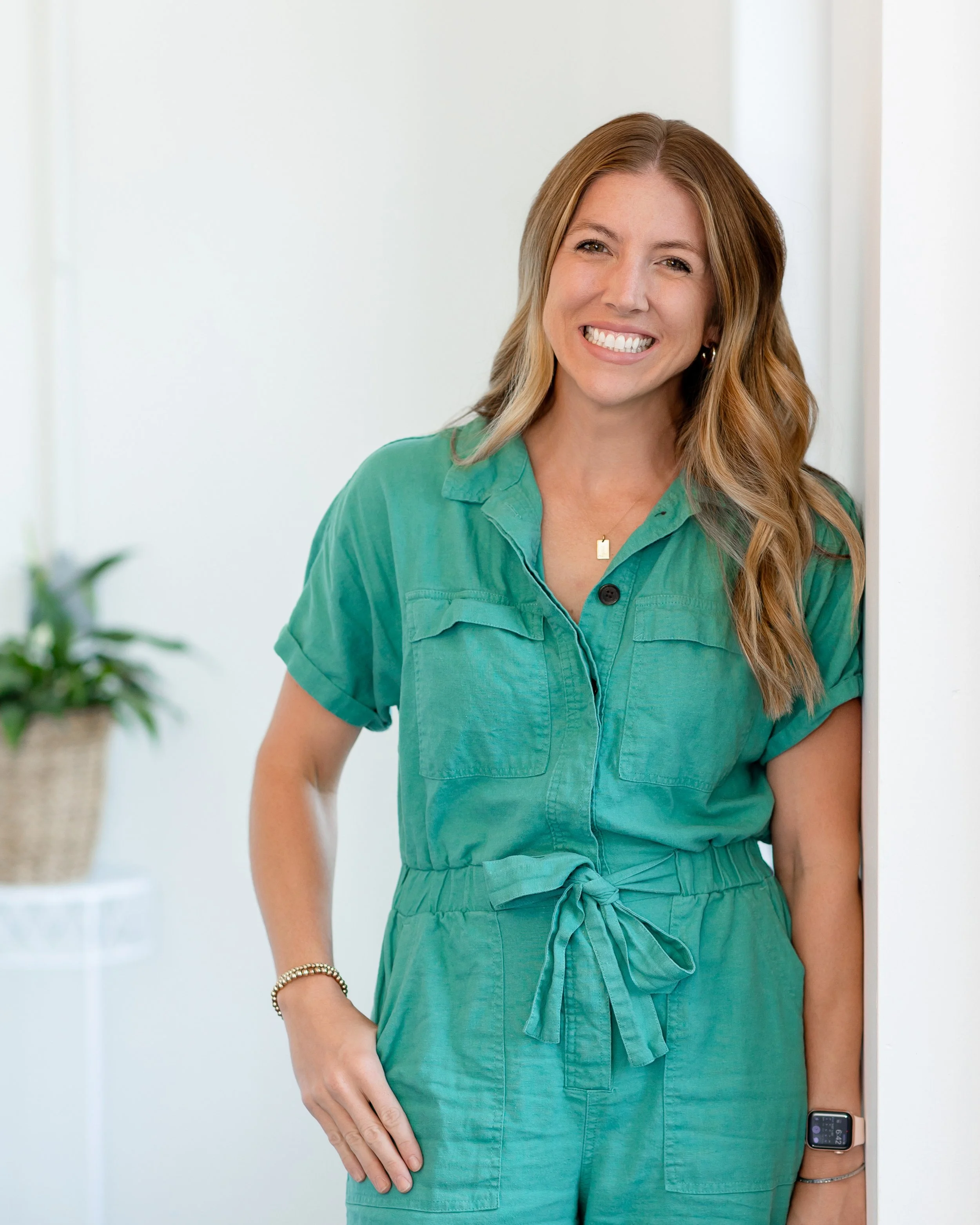
Katie Hake, RDN, LD, CPT is a Registered Dietitian Nutritionist, Certified Personal Trainer, and the founder of Katie Hake Health & Fitness, LLC based in Carmel, Indiana. She and her team of non-diet dietitians specialize in helping folks break free from dieting, rebuild trust with their bodies, and create sustainable habits that support energy, confidence, and health. Through both in-person and virtual counseling, Katie and her team proudly serve clients across Indiana and beyond, empowering them to use their insurance benefits to access compassionate, evidence-based nutrition care and fitness coaching.