Strength Training for Women Who Hate the Gym
If the idea of stepping into a gym makes your stomach drop, you are not alone… and there is nothing wrong with you.
Maybe it is the mirrors. Maybe it is the feeling that everyone else already knows what they are doing and you do not. Maybe it is the chronic background noise in your head that says your body needs to look different before you are allowed to take up space in a fitness setting. Maybe you have tried before, stopped, and starting again feels like admitting you failed.
Whatever the reason, avoiding the gym is not laziness. It is self-protection. And it makes complete sense.
But here is the thing: you do not have to be ready for a gym to start getting strong. And getting strong might be one of the most powerful things you can do for your energy, your mood, your metabolism, and your relationship with your body.
Let's talk about it.
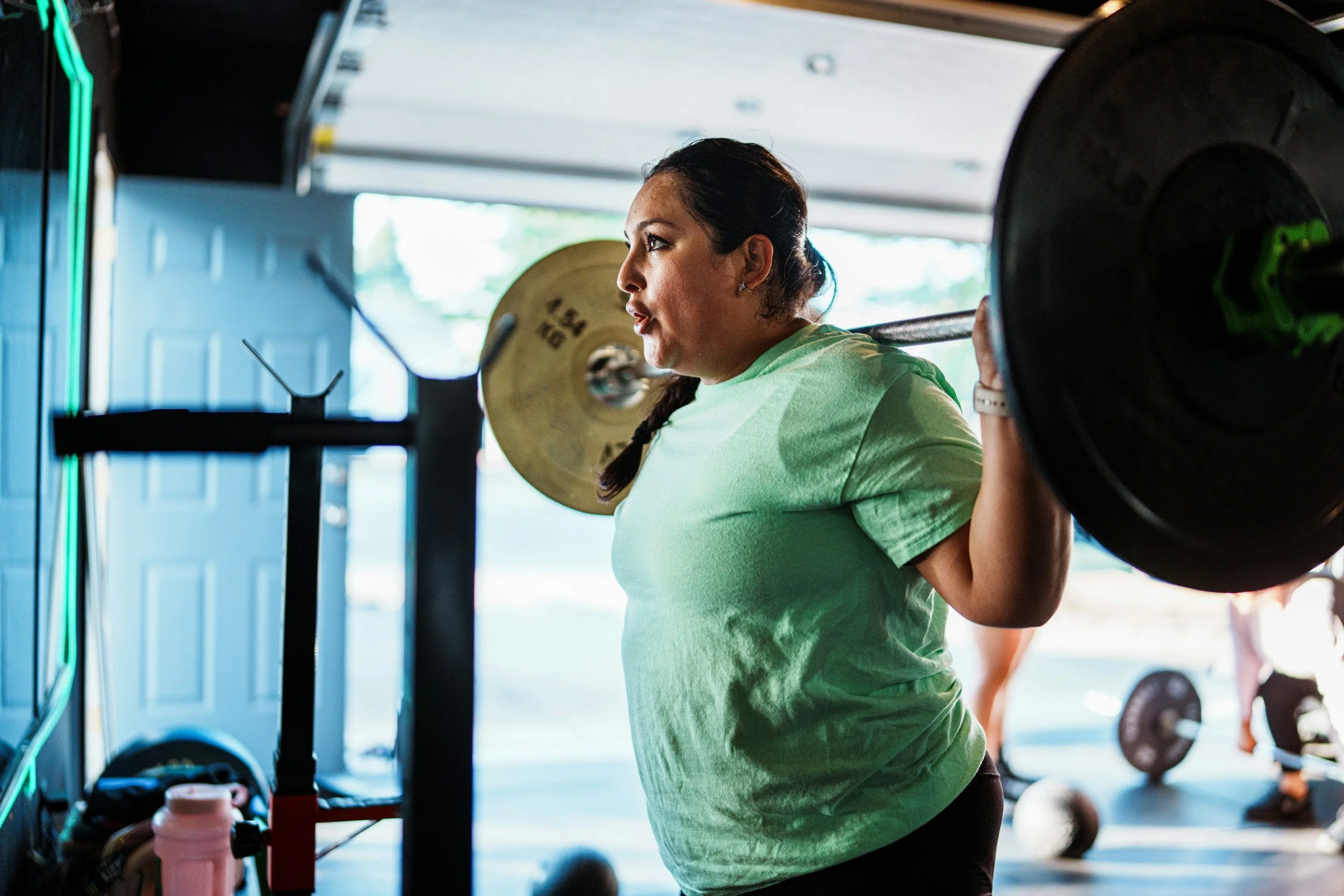
Why Strength Training Matters (And It Has Nothing to Do With How You Look)
Strength training often gets framed as a tool for changing your body. But from a non-diet dietitian and trainer perspective, that is not the reason to recommend it.
The reason is how it makes you feel.
Here is what consistent strength training actually does:
It supports your energy. Muscle tissue is metabolically active, meaning the more of it you have, the more efficiently your body produces and uses energy throughout the day.
It regulates your mood and reduces anxiety. A 2023 meta-analysis published in the British Journal of Sports Medicine reviewed nearly 100 studies and concluded that exercise should be a "mainstay approach" in managing depression and anxiety. Notably, strength training outranked aerobic exercise, mixed exercise, and mind-body exercise for improving mental health symptoms. The sweet spot? 30 to 60 minutes of resistance training, three to four times per week.
It supports your hormones and metabolism. Especially for women navigating perimenopause, postpartum recovery, or chronic stress, strength training is one of the most evidence-backed tools available. A 2023 systematic review found that strength training produced significant improvements in bone density, hormonal balance, and metabolic markers in menopausal women compared to inactive controls. Research also shows that even a single bout of exercise can produce acute improvements in insulin sensitivity, with chronic adaptations building after at least 8 weeks of consistent training.
It helps you feel capable in your body. Not in a "look what I can do for the gram" way. In a carry my groceries, pick up my kids, climb the stairs without dying way. That is real, functional confidence.
None of those benefits require a gym membership, a squat rack, or ever setting foot in a class where someone might look at you sideways.
The Real Reason the Gym Feels So Hard (And It Is Not Motivation)
Here is something that comes up constantly with clients: it is not a motivation problem. It is a shame problem.
Shame that their body is not small enough yet to be seen working out.
Shame that they do not know what they are doing and might look foolish.
Shame from the time a trainer said something they have never forgotten. Or the time someone stared. Or the time they felt completely out of place and never went back.
Shame is heavy. It is not a character flaw. It is a very human response to years of messaging that said fitness spaces are for people who have already arrived at a certain body, a certain fitness level, a certain version of themselves you have not become yet.
That messaging is wrong. But knowing it is wrong does not always make it feel less true in the moment.
So instead of telling you to push through it and just go anyway, the goal here is to meet you exactly where you are.
Where to Actually Start (No Gym, No Overwhelm, No Perfect Plan Required)
Starting does not require having it all figured out. It requires one small next step.
Start at home with bodyweight. Squats, hinges, push-up variations, glute bridges, and rows with a resistance band or a set of dumbbells cover every major muscle group and can be done in your living room in 20 to 30 minutes. That is a full, effective workout. You do not need equipment. You do not need a lot of space. You just need to start.
Pick a program that tells you exactly what to do. Decision fatigue is real. One of the biggest barriers to consistent training is not knowing what to do, and then spiraling into not doing anything at all. A structured program removes that barrier completely. (This is exactly what the Fitness Reboot is designed for.)
Give yourself permission to do less than you think “counts.” Ten minutes of movement counts. A 20-minute walk counts. Two sets instead of three counts. Your body does not care about perfect. It cares about consistent. The version of a workout you can actually sustain will always beat the one you white-knuckle through twice and abandon.
Find a setting where you feel safe. For some women, that is home. For others, it is a small private gym with a trainer who understands their history. For others, it is an outdoor space where they feel less visible. There is no wrong answer. The right setting is the one that lowers the barrier enough for you to actually show up.
A Note on Bodies, Shame, and Doing This Anyway
Here is something that comes up a lot: you might start strength training and still have hard days with your body. You might catch a glimpse of yourself mid-workout and your brain might go somewhere unkind. That is not a sign you are doing it wrong. That is just the reality of healing a relationship with your body while also living in it.
Strength training is not a cure for body shame. But it can be a really meaningful part of the antidote.
Because over time, something quietly shifts. You start noticing what your body can do, rather than just how it looks. You feel stronger, more capable, more at home in your own skin. Not because your body changed dramatically but because your relationship with it did.
That is the real goal here. Not a different body. A different experience of the body you already have.
Ready to Start But Not Sure Where?
If you have been waiting until you feel more ready, more confident, less overwhelmed, or "in a better place" to start moving your body, hear this: that day might not come on its own.
Sometimes you start before you feel ready. And the readiness follows.
The Fitness Reboot is built exactly for this moment. Virtual, customized to your goals and schedule, with app-based tracking and real feedback. No gym required. You deserve to feel strong. In the body you have. Right now.
About the author
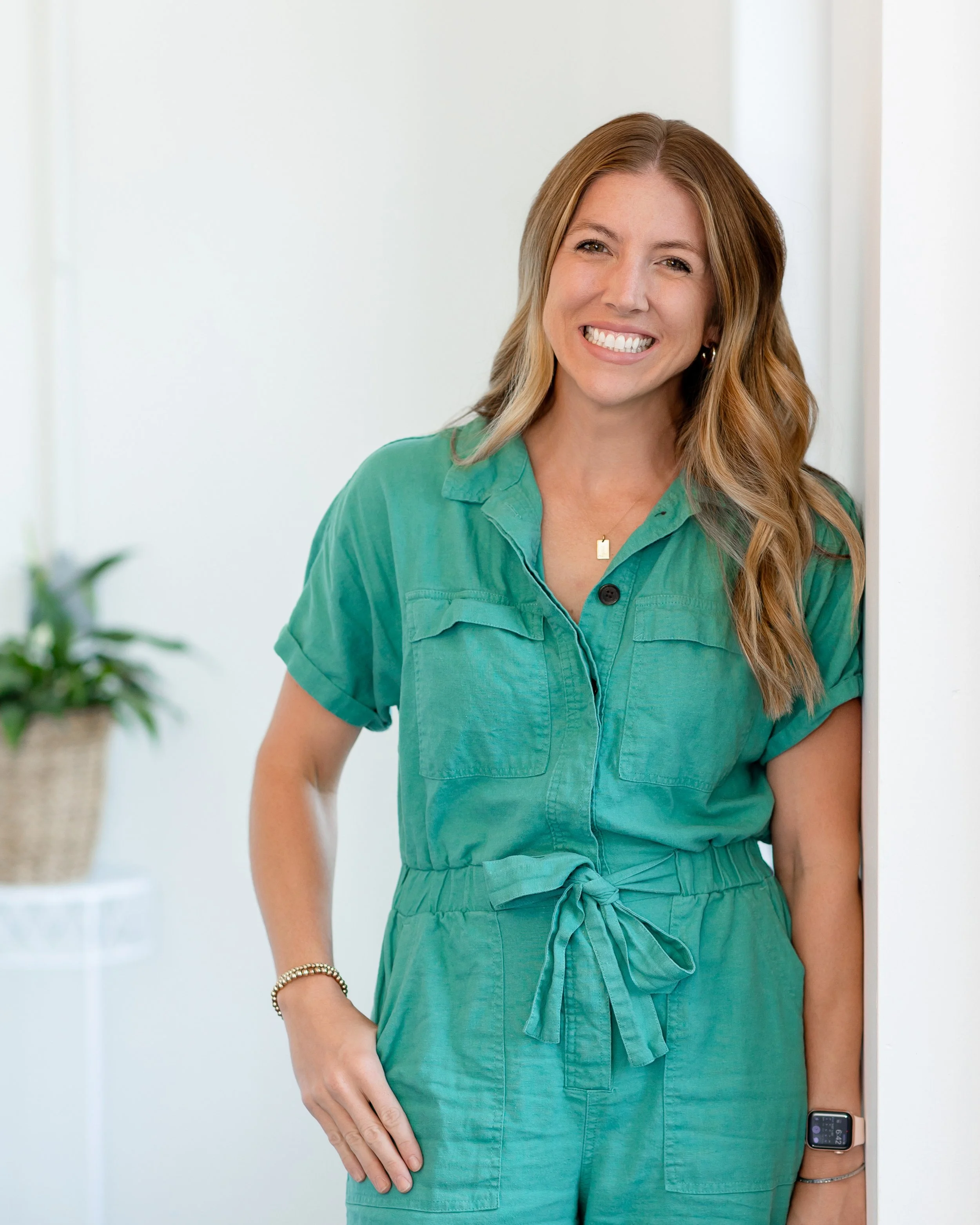
Katie Hake, RDN, LD, CPT is a Registered Dietitian Nutritionist, Certified Personal Trainer, and the founder of Katie Hake Health & Fitness, LLC based in Carmel, Indiana. She and her team of non-diet dietitians specialize in helping folks break free from dieting, rebuild trust with their bodies, and create sustainable habits that support energy, confidence, and health. Through both in-person and virtual counseling, Katie and her team proudly serve clients across Indiana and beyond, empowering them to use their insurance benefits to access compassionate, evidence-based nutrition care and fitness coaching.